
Our Redeemer Lives – Job


“Our Redeemer lives”. This truth is grounded in scripture and affirmed through clinical wisdom. This truth gives us the strength to live with vitality even in the face of suffering. Faith in God does remove our pain from the human story, but offers a way to live honestly with it.
Suffering Is Part of the Human Experience
Every person will at some point face emotional or psychological distress. Across a lifetime, many will encounter what could be described as a mental health event. This could be an adjustment to a major life change, losing a loved one, or a crisis that alters the trajectory of your life.
These experiences are not signs of weakness. They are part of being human.
Common examples include:
- Grief after death or separation
- Anxiety following a sudden loss or accident
- Depression after prolonged stress or uncertainty
Trauma after events that overwhelm a person’s sense of safety
Job and the Reality of Loss
The story of Job gives us an example of this reality. Job lived an ordinary life marked by faithfulness to God. Without warning, he lost his children, his livelihood, and his health. In the ancient world, this loss carried significant social and spiritual weight.
Job’s suffering raises questions many still ask:
- Why does this happen?
- What did I do wrong?
- Why now?
These questions often surface when death or devastation forces us to confront the limits of our control and the certainty of our mortality.
When Meaning Is Threatened
These moments of distress often trigger an existential crisis. A car accident, a sudden diagnosis, and unexpected death can pull someone into a state of despair. These circumstances usually make us question life.
Job’s friends attempted to give him answers to these questions. They suggested that he must have sinned in some way to cause this circumstance and that Job should repent. While personal choices do carry consequences, this does not account for the reality that suffering is not always a punishment for something we did.
These types of explanations serve more to ease the fear of the observer rather than comfort the one who is hurting.
Pain and the Counseling Process
Acceptance and Commitment Therapy (ACT) discusses the human desire to eliminate pain. A person will naturally want to fix what is hurting and prevent future pain. However, these attempts to control the uncontrollable often deepen our distress.
This pattern can look like:
- Avoiding grief rather than allowing ourselves to experience it
- Fighting anxiety rather than learning to hold it differently
- Suppressing trauma responses instead of leaning into them and addressing them
Over time, this struggle can intensify depression, prolong grief, and reinforce trauma patterns.
Choosing Vitality Over Avoidance
The healing process often begins with acknowledging what cannot be changed while choosing how to live in response to it. The counseling process invites a person to reconnect with values that give their life meaning.
From a Christian perspective, this includes asking:
- How does God call me to live in the midst of suffering?
- What remains meaningful even now?
Who am I becoming through this hardship?
Job’s Declaration of Hope
In the midst of loss and unhelpful counsel, Job reaches a place of clarity. He does not deny or avoid his suffering or pretend that it is resolved. Instead, he affirms the hope that exists beyond it.
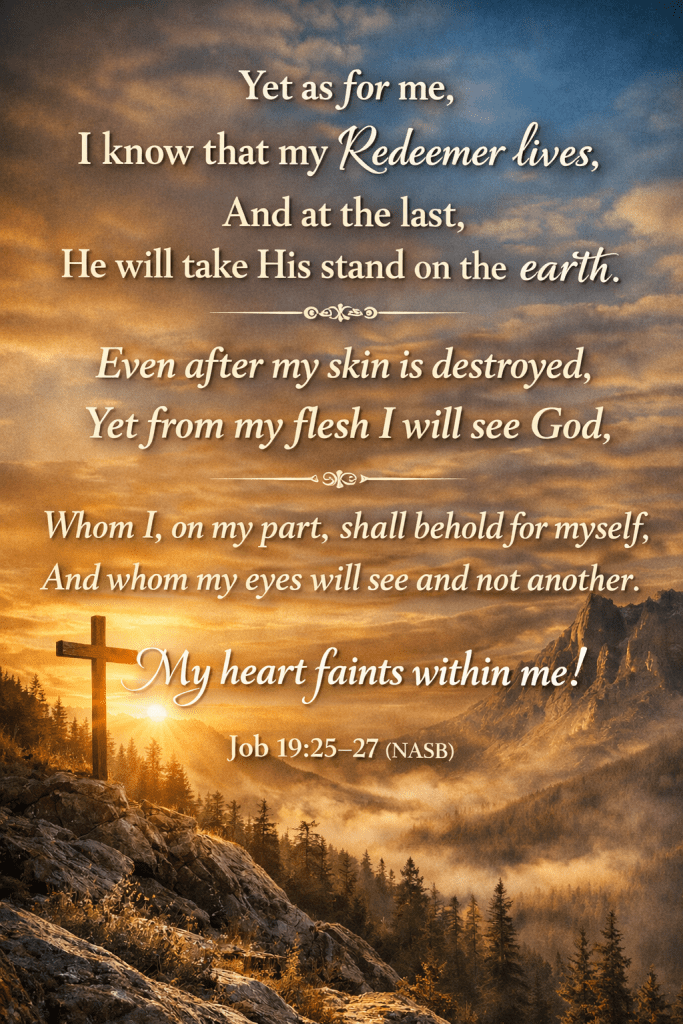
This declaration is not an escape from pain. It is a statement of trust that suffering does not have the final word, that our redeemer lives!
Holding Pain Without Becoming It
Pain and suffering, unfortunately, are a part of life. Every person will encounter it in some form. The goal is not to eliminate the suffering entirely, but to relate to it differently.
Growth often comes through:
- Naming pain honestly
- Allowing grief and fear without being consumed by them
- Anchoring life in values that endure hardship
The depth and duration of mental health struggles are often shaped not only by what happens to us, but how we respond to it.
Faith-based counseling can offer a path forward even when the road ahead may be difficult.
About the Author